
From IP to Experience: A Guide to Immersive Experiences for Rights Holders
7 min read
An established intellectual property starts with something a new attraction has to build from zero: recognition, meaning and an existing relationship with an audience. That can make IP a powerful foundation for immersive entertainment.
An established intellectual property starts with something a new attraction has to build from zero: recognition, meaning and an existing relationship with an audience. That can make IP a powerful foundation for immersive entertainment.
Film and television worlds can become physical environments. Art, heritage and cultural figures can become narrative journeys. Music, publishing, sport and character properties can use space, sound, interaction and play to create a new kind of participation.
But recognition is only the beginning. The challenge for an IP owner is to identify what people genuinely value about the property, then translate that into an experience that is worth leaving home for.
Why are more IP owners looking at physical experiences?
Licensing has traditionally extended intellectual property through products, publishing, media, games and promotional partnerships. Location-based entertainment adds another dimension: place.
The category is also becoming more flexible. McKinsey has highlighted the rise of more focused regional, seasonal and pop-up experiences alongside major permanent attractions. Licensing International has reported a widening range of properties entering LBE, with rights holders looking beyond the character and entertainment franchises that historically dominated the sector.
That matters because a physical extension no longer has to mean committing an IP to one enormous destination. Touring, temporary and licensed models can allow a property to reach several markets, test different scales and use existing venues.
1. Start with the reason people care about the IP
The first creative question is not “Which technology should we use?” It is “What must remain true?”
What do audiences recognise and value? Is it a visual world, a character, a tone, a set of ideas, a body of work, a ritual, a story or a particular emotional relationship? An immersive adaptation should make that core more tangible, not bury it underneath effects.
For a cultural figure, this may mean going beyond a collection of famous works and asking how the person saw the world. For a fictional property, it might mean identifying places, actions or choices fans have imagined entering themselves. For a music property, it might be about collective listening, performance, identity or the visual culture around the work.
2. Decide what the visitor gets to do
A screen-based audience watches. A physical audience can move. That shift creates the central design opportunity. Visitors can explore, trigger content, solve, build, play, listen, choose a route or simply encounter familiar material from inside a spatial environment. Even a largely narrative experience becomes less passive when the visitor controls pace and perspective.
The right level of participation depends on the property. Not every IP needs gamification; not every experience needs touchscreens. Agency can be as simple as choosing where to stand and what to follow. What matters is that the physical format changes the relationship between audience and subject.
3. Build a story that works in space
Most established IP contains far more material than one attraction can use. Curation is therefore part of design.
A physical visitor journey needs rhythm. There should be a reason to move from one space to the next, a sense of progression, and enough contrast in scale, sound and intensity for key moments to land. A sequence that works on a screen does not automatically work when people are free to look in different directions or move at different speeds.
This is especially important for cultural properties, where the temptation can be to turn a large archive into a digital slideshow. An immersive experience should reveal a point of view. The material needs an organising idea strong enough to guide both the visitor and the technology.
4. Choose the format before the technology
Projection, LED, spatial audio, sensors, AI, extended reality and interactive media are tools. They should be chosen because they unlock something useful in the property.
A large projection can change scale and make a visual world architectural. Spatial sound can carry a narrative across a room. Sensors can make the environment responsive. Digital systems can allow content to be reconfigured for a different footprint. None of those benefits requires every production to use every technology.
The test is simple: if a technical feature disappeared, would the audience lose something important about the story or their role inside it? If not, it may be spectacle rather than design.
5. Design brand governance into the production
Every physical extension changes how an audience encounters the property. That makes creative governance a production issue, not paperwork to be added after development.
Rights holders need to know which imagery, stories, language and assets can be used, who approves new material, what cannot change between markets and how the experience is presented alongside the wider brand. Producers and operators need enough clarity to build and market the show without waiting for a fresh interpretation of the rules at every stage.
The strongest governance protects the essence of the IP while still making the physical product workable. Too little control can dilute the property; too much can make adaptation and local delivery painfully slow.
6. Think about touring and localisation from day one
An immersive experience can be a one-off installation, but IP owners seeking international reach should decide early whether repeatability is part of the ambition.
A touring format may need to work in different footprints, use locally sourced equipment, adapt to different power or acoustic conditions and support more than one language. The audience proposition may also need to change by market: the same subject can carry different levels of familiarity, cultural context and tourism appeal from one city to another.
Those are not simply logistics. They affect the creative design and economics. A show that can travel cleanly is a different product from a beautiful installation that has to be reinvented each time it moves.
7. Build a commercial model that survives the real world
The creative idea and the operating model should be developed together. Venue size, ticket price, run length, session format, dwell time, staffing, installation, maintenance and marketing all shape what a local operator can support.
For a rights holder, this means asking how the experience makes money without reducing the decision to a royalty percentage. Is the footprint proportionate to likely demand? Can the format move efficiently? Does the local operator have enough room to build a viable P&L? Are brand standards achievable without unnecessary local cost?
A scalable licensing model does not remove risk, but it should make the variables visible and repeatable enough for serious partners to assess them.
8. Choose partners with both creative and operational range
IP-led immersive entertainment combines rights management, storytelling, design, technical production, venue adaptation, live operation and local marketing. A partner can be excellent at one of these and still be the wrong lead for the whole project.
Rights holders should look beyond concept art and ask practical questions. How will the experience be produced? How does it travel? What does the operator need to supply? How are approvals managed? How is technical reliability maintained? What has been learned from previous markets?
The strongest partner should be able to protect the creative proposition while designing for repeatable delivery. That is what allows the IP to scale without becoming generic.
Da Vinci Genius: using a cultural figure as a world, not a label
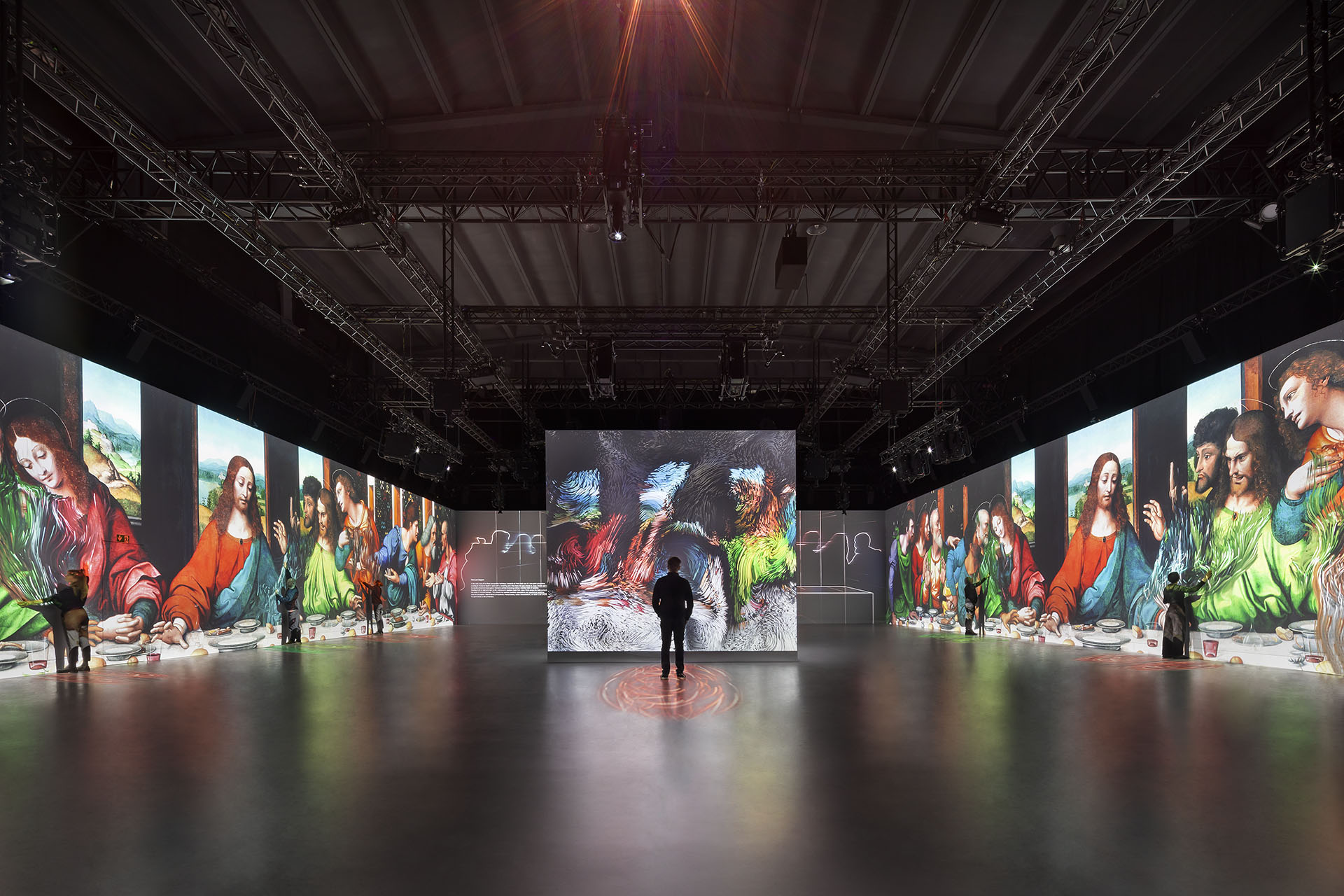
Phoenix Immersive's Da Vinci Genius offers a useful example. Leonardo da Vinci is globally familiar through works including the Mona Lisa and The Last Supper, but the experience is not built simply around enlarging famous paintings. It treats Leonardo as a polymath and explores his curiosity across art, invention, astronomy and science.
Large-scale visuals, spatial sound and participatory design allow audiences to move through those ideas. The show was developed with multidisciplinary studio flora&faunavisions and features an original score by GRAMMY-nominated electronic producer Sasha.
Crucially for an IP owner thinking about reach, the production has also been designed for international touring and has already been presented across Europe, Asia and the United States. The creative proposition and the distribution model were built to support each other.
The test: does physical presence add something?
The best immersive adaptations do not ask an audience to pay for a larger version of content they already know. They create a new relationship with the property.
That may mean standing inside an artistic world, hearing a story spatially, influencing an environment or discovering a familiar subject from an unexpected perspective. The exact format will change from one IP to another, but the question should remain constant: is there a reason this experience needs to be physical?
When the answer is yes, location-based entertainment can become more than another licensing category. It can become a new way for the audience to understand why the IP mattered in the first place.
Interested in licensing or hosting a Phoenix Immersive experience? Get in touch.