
What Is Location-Based Entertainment? A Guide for IP Owners and Operators
7 min read
- location-based entertainment
- what is location-based entertainment
- location-based entertainment licensing
- LBE entertainment
- location based entertainment examples
Location-based entertainment, usually shortened to LBE, is entertainment designed to be experienced in a physical place.
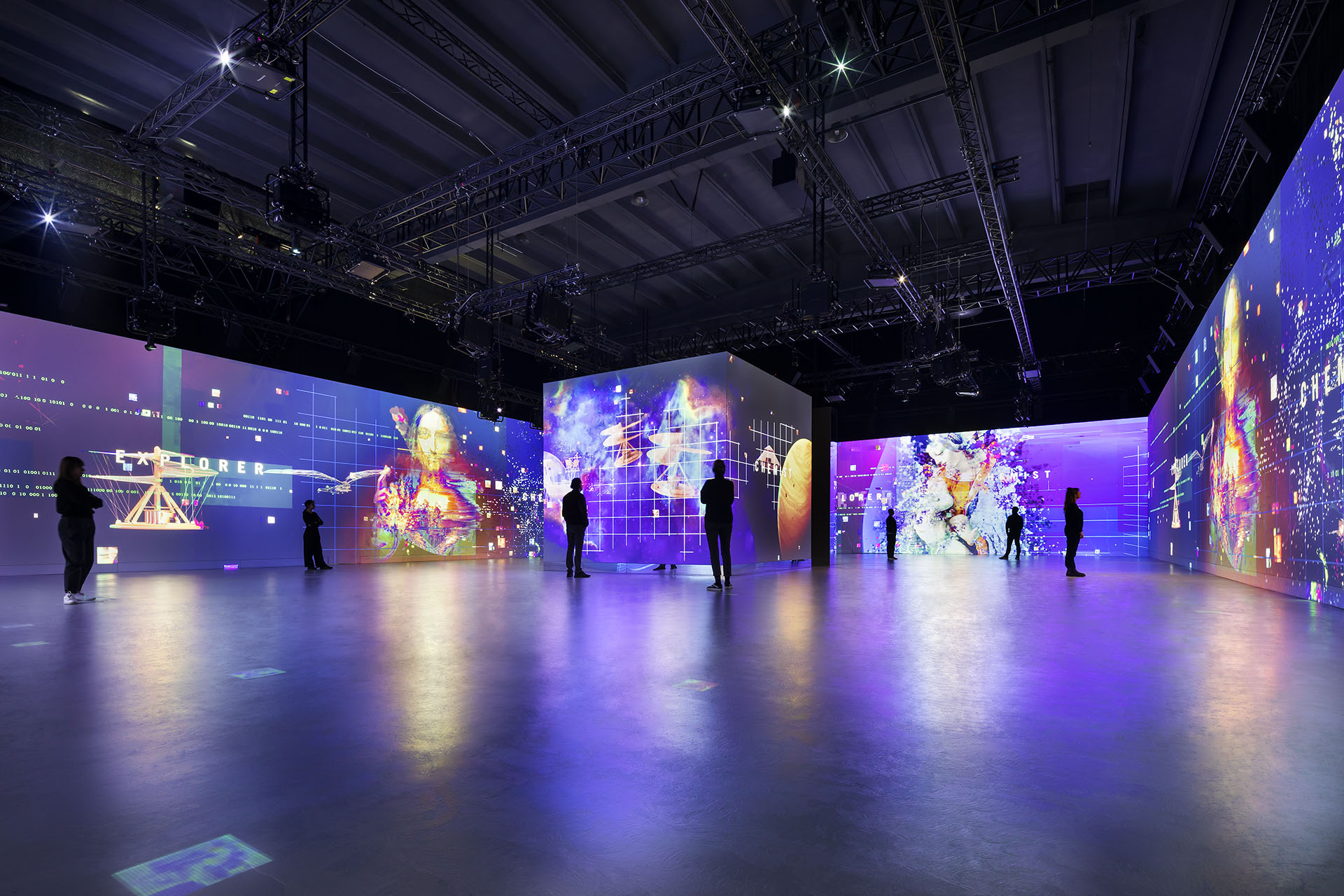
Location-based entertainment, usually shortened to LBE, is entertainment designed to be experienced in a physical place. The category includes theme parks and family entertainment centres, but it now stretches much further: immersive exhibitions, branded attractions, interactive shows, experiential retail, live gaming, touring installations and other ticketed experiences can all sit within LBE.
The common feature of location-based entertainment is that the location is part of the product. Audiences do not simply consume a story, brand or idea through a screen. They enter a space built around it, and the journey through that space becomes part of the experience.
That makes location-based entertainment particularly relevant to IP owners, cultural organisations and operators looking for new ways to turn audience interest into something physical, social and memorable.
What counts as location-based entertainment?
There is no single LBE format. At one end are permanent destination attractions: theme parks, museums, family entertainment centres, water parks and purpose-built branded venues. At the other are temporary or touring formats that can move between cities, use existing real estate and operate for a defined run.
Between those points sits a growing range of concepts. A film or character property might become a walk-through world. A cultural figure can become an interactive exhibition. A sports brand can create a fan experience. A publisher, artist or music property can use projection, sound, performance or play to give audiences a reason to encounter the IP in person.
Licensing International has described the modern UK LBE market as extending beyond traditional themed attractions into immersive experiences, competitive socialising, live gaming, branded exhibitions and experiential retail. The label is broad because the audience expectation has changed: people increasingly understand that a “day out” can sit somewhere between entertainment, culture, technology and hospitality.
Why is LBE expanding now?
For many years, location-based entertainment was associated with large capital projects and long-term real estate commitments. Those models still matter, but they are no longer the only route.
McKinsey's 2026 analysis of the sector points to more focused regional, seasonal and pop-up attractions as a way for brands and media properties to enter physical entertainment with more flexibility than a major theme-park-scale development. Existing venues and underused spaces can become part of that model, making touring and temporary formats strategically important.
The result is a wider field of potential participants. An IP owner no longer needs to think only in terms of a permanent destination. An operator can bring a developed show into its market. A landlord can consider entertainment as an active use of space. A cultural organisation can reinterpret familiar material through a format that encourages participation rather than passive viewing.
Why are IP owners interested in location-based entertainment?
Established intellectual property already carries recognition, memory and emotional meaning. LBE can turn that relationship into a place.
For film and television, that may mean stepping into a world audiences previously saw on screen. For art, heritage or a historical figure, it may mean moving through ideas, images and stories at a scale a conventional page or display cannot provide. For sport or music, the value may be collective participation and the feeling of being physically inside a fan culture.
Commercially, LBE can also create another licensed category around an IP, support audience development and open new markets. The important qualification is that recognition alone is not enough. A familiar logo does not justify a ticket. The physical experience needs to add something audiences cannot get from the original medium.
What makes an IP suitable for LBE?
The strongest starting point is not simply fame. It is depth. Does the property contain a world, visual language, character, story, idea or behaviour that can become spatial? Is there enough for a visitor to discover over the course of a real journey rather than one photo opportunity?
A useful development question is: what can the audience do here that they could not do with the IP anywhere else? They might explore, make choices, trigger content, play, create, solve, listen, move through different perspectives or simply experience familiar material at a new physical scale.
That is one reason cultural and educational subjects can work well in immersive formats. They often contain layers of material that can be curated into a journey rather than relying on a single narrative moment.
Permanent, touring or temporary?
The commercial model and the creative model are connected. A permanent attraction can be designed very specifically around one building. That can produce a highly integrated environment, but it also creates a long-term commitment to one location and one set of technical conditions.
A touring or licensed show needs a different discipline. It has to preserve its creative identity while adapting to different footprints, access routes, local equipment, languages, audience expectations and operating partners. That means scalability cannot be added at the end; it has to influence the production from the beginning.
Temporary formats can also help test demand or use a market for a season rather than indefinitely. The “right” model is therefore less about prestige than fit: the audience, property, venue, capital requirement and desired geographic reach should point towards the format.
Technology should earn its place
LBE is often described through its technology: projection, LED, virtual reality, augmented reality, AI, sensors or spatial audio. Those tools can transform a space, but they are not the definition of a good experience.
The more useful question is what each system lets the audience feel or do. Projection can alter scale and architecture. Spatial audio can direct attention and make environments feel alive. Interactive systems can make the visitor's presence matter. Digital media can make content easier to adapt across venues than a large collection of physical scenery.
When technology exists only to demonstrate that the attraction is technologically advanced, it can quickly become spectacle without meaning. The strongest LBE concepts use technology in service of the story, IP and audience journey.
###What should operators assess before licensing an LBE concept?
A compelling show is only one part of the decision. Operators need to understand how the experience behaves as a live business in their own market.
- Audience fit: who is expected to attend, and why?
- Market fit: catchment, tourism, competition, seasonality and achievable ticket price
- Venue fit: usable geometry, height, light control, power, acoustics, access and visitor flow
- Technical fit: what equipment, installation and ongoing support are required
- Operating fit: staffing, dwell time, capacity, customer service, accessibility and maintenance
- Commercial fit: full local costs, realistic utilisation and run length
- Marketing fit: whether the proposition can be explained and made culturally relevant in the market
A licensing conversation should make these questions easier to answer. It should not ask an operator to accept the creative pitch first and discover the operational model later.
How licensing changes the LBE model
Developing an attraction from scratch can require the operator to assemble rights, creative direction, content production, technical design and operating knowledge at the same time. Licensing a developed show moves some of that work upstream.
The producer can bring the concept, creative content, technical framework, brand standards and experience of previous installations. The local operator brings the venue, market knowledge, ticketing, local team and day-to-day execution. The value is not that the local work disappears; it is that the creative product and delivery framework start from a more developed position.
This is particularly useful for international touring, where the challenge is to keep the show recognisable while allowing enough flexibility for a different building and local audience.
A current example: Da Vinci Genius
Phoenix Immersive's flagship show, Da Vinci Genius, demonstrates one approach to IP-led location-based entertainment. The experience uses Leonardo da Vinci as more than a source of famous images. It explores the way he thought across art, invention, astronomy and science, turning those ideas into a multi-sensory journey built from large-scale visuals, spatial sound and participatory design.
The production was developed with multidisciplinary studio flora&faunavisions, with an original score by GRAMMY-nominated electronic producer Sasha. It has been presented in Amsterdam, Berlin, Tallinn, Riga, Delhi, South Florida and Mumbai and has been designed with a scalable footprint for international touring.
That combination is central to the modern LBE model: a recognisable cultural subject, a distinct physical reason to visit, and a production framework that can move rather than belonging to only one building.
Where location-based entertainment is heading
The direction of travel is towards a wider range of IP, formats and scales. Licensing International has recently reported more targeted properties entering LBE, including sectors that would not historically have been obvious candidates for ticketed physical experiences.
For IP owners, that means the question is no longer simply whether a property is big enough for a theme park. It is whether there is a meaningful physical expression of the property and a format proportionate to the opportunity. For operators, it means there is more content to choose from, but a greater need to judge creative quality, repeatability and market fit.
The strongest location-based entertainment does not feel like a marketing extension placed inside a room. It feels like a place the audience could not have encountered any other way. That is the point at which LBE becomes more than another licensing category: it becomes a new route into the IP itself.
Interested in licensing or hosting a Phoenix Immersive experience? Get in touch.
More from the studio