
Touring vs Permanent Immersive Experiences: What Should Operators Consider?
5 min read
An immersive experience can live in one building for years or move from city to city. Those two models may look similar to an audience buying a ticket, but they create very different questions for the people producing and operating the show.
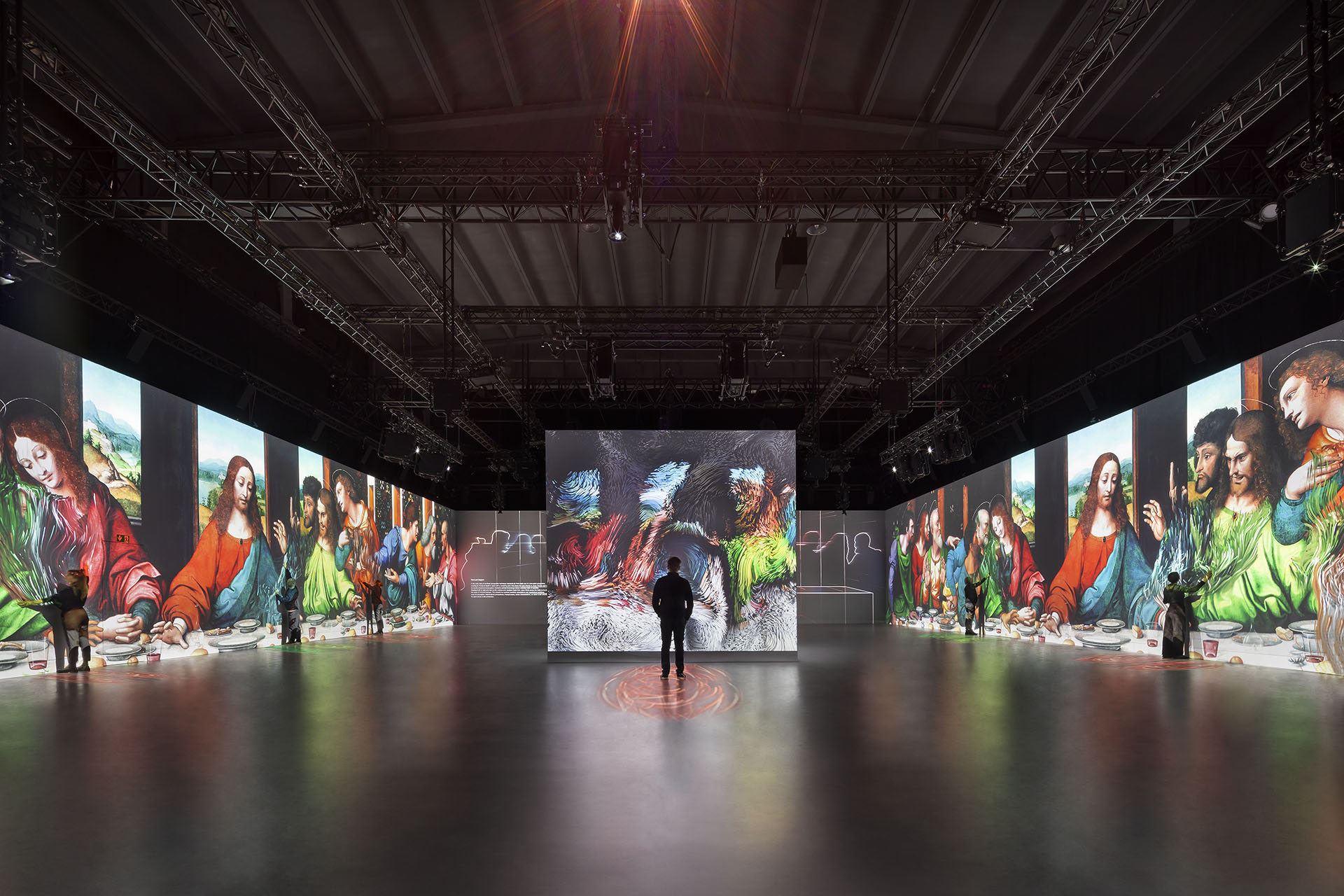
An immersive experience can live in one building for years or move from city to city.
Those two models may look similar to an audience buying a ticket, but they create very different questions for the people producing and operating the show.
A permanent attraction can be designed around one building from the outset. A touring production has to retain its creative identity while adapting to different spaces, technical conditions and local audiences.
Neither model is obviously better. The useful question is which one fits the operator, venue, market and content.
What is a touring immersive experience?
A touring immersive experience is designed to be presented in multiple locations rather than built permanently into a single venue.
That means portability must be considered at the creative and technical stages.
The production needs a clear core identity, but it also needs enough flexibility to work when room dimensions, ceiling heights, access routes and local infrastructure change.
Touring does not mean making every venue identical. The key to successfully touring a recognisable product is identifying which parts of the experience are essential and which can adapt without weakening its identity.
Phoenix Immersive develops its productions with international deployment in mind. Da Vinci Genius has already been presented across multiple cities, while its current licensing structure offers scalable configurations for different venue sizes.
How permanent experiences differ
A permanent immersive attraction has a different advantage: the building and the experience can be developed around each other.
Projection positions, scenic elements, audio, interaction and visitor circulation can be designed for a known environment. Major architectural interventions may also make more sense when the installation is expected to remain in place for a long period.
The trade-off is commitment.
A permanent build ties more of the creative and technical design to one location. Changing the programme later may require substantial new development, depending on how tightly the content and infrastructure are connected.
Touring models prioritise repeatability
For a touring production, repeatability matters.
Every new opening involves a degree of local adaptation, but rebuilding the show from first principles in every city would undermine the logic of touring.
A strong touring framework therefore separates the core production from the venue-specific work.
The content, interaction logic, brand and overall audience journey remain controlled. Technical integration then adapts that production to the local environment.
This can also make the planning process clearer for operators because the requirements of the show are known before installation begins.
Venue flexibility can widen the opportunity
One of the attractions of touring content is that it can bring a new programme into an existing building for a defined period.
That might be a dedicated cultural venue, an events space, a converted commercial unit or another building capable of supporting the production.
Scalability can widen those possibilities further.
Phoenix Immersive currently offers Compact, Medium and Flagship versions of its productions at approximately 90 sqm, 180 sqm and 400 sqm. This gives potential partners a way to begin the conversation around the space they actually have rather than assuming every immersive show requires a vast permanent hall.
The detailed suitability of a venue still depends on more than floor area, but scalable formats can make the initial fit easier to assess.
Temporary programming creates natural marketing moments
A touring residency also has a built-in sense of change.
The arrival of a new show creates a launch moment. A limited run can give audiences a reason to visit within a particular window. When the residency ends, the venue can move to another programme.
That rhythm can be useful for operators who want their venue to evolve rather than be associated with one permanent attraction.
It also places pressure on marketing.
A permanent attraction has time to build local recognition. A touring show needs to establish awareness, explain the proposition and convert interest within a shorter period.
That makes pre-launch education, local partnerships, press and clear audience positioning particularly important.
Permanent does not have to mean static
The distinction between touring and permanent is becoming less binary.
A venue can have permanent technical infrastructure while changing the content that runs through it.
Phoenix Immersive's current licensing model is one example. Da Vinci Genius and Living Canvas: Van Gogh can be installed on a shared technical platform, allowing an operator to programme the titles at different times or present them as sequential residencies.
In that model, the underlying installation has continuity while the audience-facing programme changes.
For operators, this can combine some of the advantages of both approaches: technical consistency alongside fresh content and new launch opportunities.
Think about the market, not just the building
A venue may be technically capable of supporting a long-term immersive attraction without the local market being able to sustain the same title indefinitely.
Equally, a market with strong tourism, family audiences or cultural demand may support a longer residency than initially expected.
Operators should consider local population, visitor economy, competing attractions, transport, seasonality and the likely frequency of repeat visits.
The content itself matters too.
Some subjects have broad international recognition. Others may be highly relevant in one territory and less familiar in another. Touring allows producers and operators to match productions to markets rather than assuming one concept should remain everywhere permanently.
Technology needs a lifecycle plan
Immersive experiences rely on physical technology.
Projectors, media servers, sensors, audio systems and networking equipment all need to be installed, commissioned and maintained.
For a permanent attraction, the operator needs to think about long-term maintenance and eventual replacement.
For a touring show, installation and de-installation become part of the operating model. Equipment and systems need to be specified with repeat deployment in mind.
In either case, the technology should serve the experience rather than dictate it.
A technically impressive room that is difficult to maintain, adapt or operate is not automatically a strong attraction.
Which model is right?
A permanent immersive experience may make sense where the venue, market and content justify a long-term commitment.
A touring model can make sense where operators want access to developed content, the ability to refresh programming and a production designed to move between markets.
A shared-platform model sits somewhere between the two, creating a more permanent technical base with the ability to change the show running through it.
The decision should start with the audience and operating model.
What will people come to see? How often can the programme change? How much flexibility does the venue need? And how much of the creative and technical development does the operator want to take on?
Those questions are more useful than treating permanent and touring as competing categories. They are simply different ways of building an immersive programme.
Planning an immersive programme for a venue? Speak to Phoenix Immersive about touring, scalable and multi-title licensing options for your space and market.
Interested in licensing or hosting a Phoenix Immersive experience? Get in touch.