
How to License an Immersive Experience for Your Venue or Market
8 min read
Immersive experience licensing can give an operator a faster route into location-based entertainment than building a show from the ground up. The concept, content and technical approach already exist; the job is to establish whether the show can work in a particular market, venue and operating model.
Immersive experience licensing can give an operator a faster route into location-based entertainment than building a show from the ground up. The concept, content and technical approach already exist; the job is to establish whether the show can work in a particular market, venue and operating model.
That is also why immersive experience licensing should not be treated as a simple content purchase. A strong licence is a working relationship between the producer and the local operator, with clear responsibilities around the creative, technology, installation, brand, marketing and day-to-day delivery.
For anyone considering bringing a touring immersive experience to a new city, the most useful starting point is not the equipment list. It is a disciplined assessment of audience, space, economics and delivery.
Immersive experience licensing: what are you actually licensing?
There is no universal package. Depending on the production, a licence may include the creative content, software, technical specification, brand assets, operating documentation, access to protected intellectual property and ongoing producer support. Hardware, venue works, local staffing, ticketing, marketing, installation and maintenance may sit with the operator or be handled through separate partners.
The distinction matters because the headline licence fee is only one part of the project. Before comparing opportunities, an operator needs to understand where the licensed experience ends and local delivery begins. A well-structured conversation makes that division clear early, rather than allowing costs or responsibilities to emerge during installation.
1. Start with the market, not the kit
A technically impressive show can still be the wrong product for a particular city. Start with the audience: who is likely to buy a ticket, how large is the realistic catchment, and what other cultural or leisure options compete for the same time and spend?
Population is only a first clue. Tourism, transport, seasonality, local cultural behaviour, family demand, school audiences, corporate groups and realistic ticket pricing can all change the picture. An attraction aimed at a broad culture audience may need a different run length and marketing mix from a fan-led experience built around a specific entertainment property.
This is becoming more relevant as location-based entertainment broadens beyond permanent theme-park-scale attractions. Recent industry analysis has highlighted smaller regional, seasonal and pop-up formats as a more flexible route into physical entertainment. For operators, that creates more options, but it also makes market fit more important: the right format is the one whose scale matches local demand.
2. Check the show against the venue
Immersive productions use buildings differently from conventional exhibitions. Usable floor area matters more than the number on an estate listing. Ceiling height, columns, sightlines, power, network access, acoustics, daylight, loading access, emergency routes and back-of-house space can all affect the design.
Visitor flow deserves equal attention. Where do people queue? How are tickets checked? Can groups enter at the required cadence? Are there narrow transitions that reduce practical throughput? Is there enough space for staff, storage and technical control without taking it away from the audience journey?
A flexible touring production should be able to adapt to more than one type of building without losing the creative elements that make it distinctive. That adaptability is valuable, but it does not remove the need for venue due diligence. Floor plans, dimensions, photographs, access information and an honest account of site constraints are useful from the first serious conversation.
3. Understand the technical delivery model
Immersive shows can combine projection, LED, spatial audio, lighting, sensors, interactive systems, media servers and networking. The longest equipment list is not automatically the best one. What matters is whether the technology is appropriate to the creative idea and robust enough to run reliably for public opening hours.
Ask which equipment travels with the show and which can be sourced locally; what has to be installed or calibrated; what ongoing technical support is required; how faults are handled; and which environmental requirements, such as cooling, darkness or acoustic treatment, the venue must provide.
This is also where scalability becomes tangible. A production that can use standardised or locally sourceable systems may be easier to move between markets than one dependent on a highly bespoke permanent build. The exact answer depends on the show, but an operator should be able to understand the technical model before making a commercial commitment.
4. Build the whole operating model
Licence fees are only one line in the economics. A realistic model should include venue cost, fit-out, equipment, freight, installation, staffing, utilities, ticketing fees, insurance, local marketing, maintenance and de-installation, alongside any production-specific costs.
On the revenue side, avoid modelling from maximum theoretical capacity alone. Session structure, dwell time, opening hours, achievable utilisation, school or group bookings, quiet weekdays and seasonal changes all affect actual throughput. A smaller number of realistic assumptions is more useful than a spreadsheet built around every session selling out.
The producer should be able to explain the operating logic of the show even when local costs are outside its control. The operator, in turn, brings the local property, staffing, ticketing and market knowledge. The model is strongest when both sets of expertise are used rather than one side pretending to know the other market perfectly.
5. Look for proof that the format travels
Previous openings cannot guarantee future performance, but they can show whether a production has already adapted to different venues, partners and markets. For a touring or licensed format, that history matters.
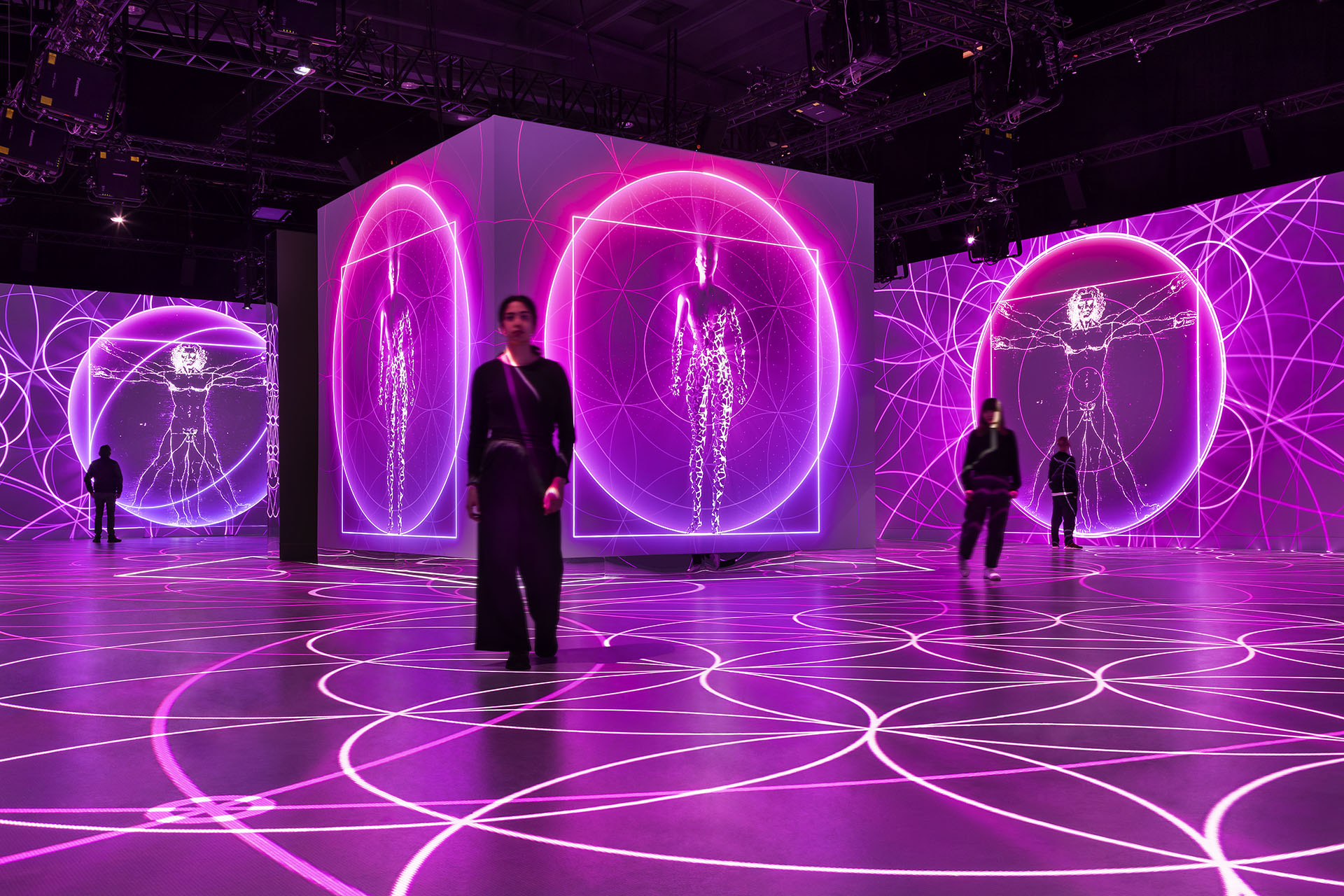
Phoenix Immersive's flagship production, Da Vinci Genius, has been presented in Amsterdam, Berlin, Tallinn, Riga, Delhi, South Florida and Mumbai, with further international launches planned. It has been designed with a scalable footprint and flexible technical configuration, giving prospective partners a real operating history to discuss rather than a concept that has only existed in one purpose-built space.
When reviewing any licensed experience, ask what changed between previous locations, what remained fixed, which lessons were carried forward and which parts of the show are genuinely adaptable. That tells you more about repeatability than a list of past city names on its own.
6. Protect creative and brand standards as the show scales##
Licensing creates reach because the original producer does not need to operate every local run directly. The trade-off is that consistency has to be designed into the model.
Creative approvals, approved assets, technical standards, visitor messaging and brand presentation should be clear enough to protect the experience without making local execution impossible. This is particularly important for IP-led work, where a weak implementation can affect the audience's view of both the attraction and the underlying property.
The aim is not to make every city identical. It is to decide what is non-negotiable and where local knowledge should lead. Language, media partnerships, launch timing and ticket packaging may need to change; the core creative identity should not.
7. Localise the launch without diluting the proposition
An international show still arrives as a local attraction. Its campaign needs to answer a simple set of questions for people in that market: what is it, why is it worth leaving home for, who is it for, and why should they visit now?
For immersive experiences, education can be part of conversion. Not every potential visitor immediately understands what an immersive show involves, so marketing should make the format tangible: the scale of the visuals, the role of sound, how people move through the space, what is interactive and how the experience differs from a conventional gallery or screen-based presentation.
Local press, tourism organisations, schools, cultural partners, creators and trusted regional brands can help translate an international proposition into a local cultural moment. The producer supplies the story and brand; the operator should know which channels carry authority in its own market.
8. Clarify responsibilities before signing
Good licensing relationships become easier when responsibilities are explicit. Before commitment, both parties should understand who owns each workstream, who approves it and what happens when assumptions change.
- Creative content and brand approvals
- Technical specification, equipment sourcing and installation
- Venue preparation, utilities and local compliance
- Ticketing, customer service and front-of-house operation
- Local marketing, press, partnerships and audience development
- Maintenance, troubleshooting and technical support during the run
- De-installation, freight, storage and any onward move to another market
The contract will set out the legal position, but the operational conversation should be understandable without reading a clause. If the working team cannot explain who does what in plain English, the delivery model probably needs more work.
9. Choose the partner, not just the show
Immersive entertainment sits between creative production, technology, licensing and live operation. A striking concept image is not enough; neither is a commercially tidy model with no compelling reason for an audience to care.
Look for a partner that can discuss storytelling and audience experience with the same seriousness as venue fit and operational repeatability. That balance is what turns a one-off installation into a product capable of travelling.
How Phoenix Immersive approaches licensing
Phoenix Immersive develops and curates premium immersive experiences for international audiences. Its model connects IP holders, creative partners and local operators, with shows developed for licensing and global rollout rather than only one permanent home.
Da Vinci Genius is the current flagship example. Produced with multidisciplinary studio flora&faunavisions and featuring an original score by GRAMMY-nominated electronic producer Sasha, the experience uses large-scale visuals, spatial sound and participatory design to explore Leonardo da Vinci's ideas across art, invention and science.
For a prospective licensee, the useful next step is not a generic sales call. It is a conversation about the market, venue and operating context, so both sides can decide whether the opportunity makes sense.
The decision in one sentence
A good immersive experience licence should make creative sense for the audience, practical sense for the building and commercial sense for the operator. If all three align, the licence becomes more than access to content; it becomes a repeatable way of bringing a proven experience to a new market.
Interested in licensing or hosting a Phoenix Immersive experience? Get in touch.