
What Makes an Immersive Experience Actually Immersive?
6 min read
An immersive experience is one that makes the audience feel present inside the experience rather than simply positioned in front of it. That sense of presence can come from story, space, sound, interaction, scale or technology, but no single ingredient creates immersion on its own.
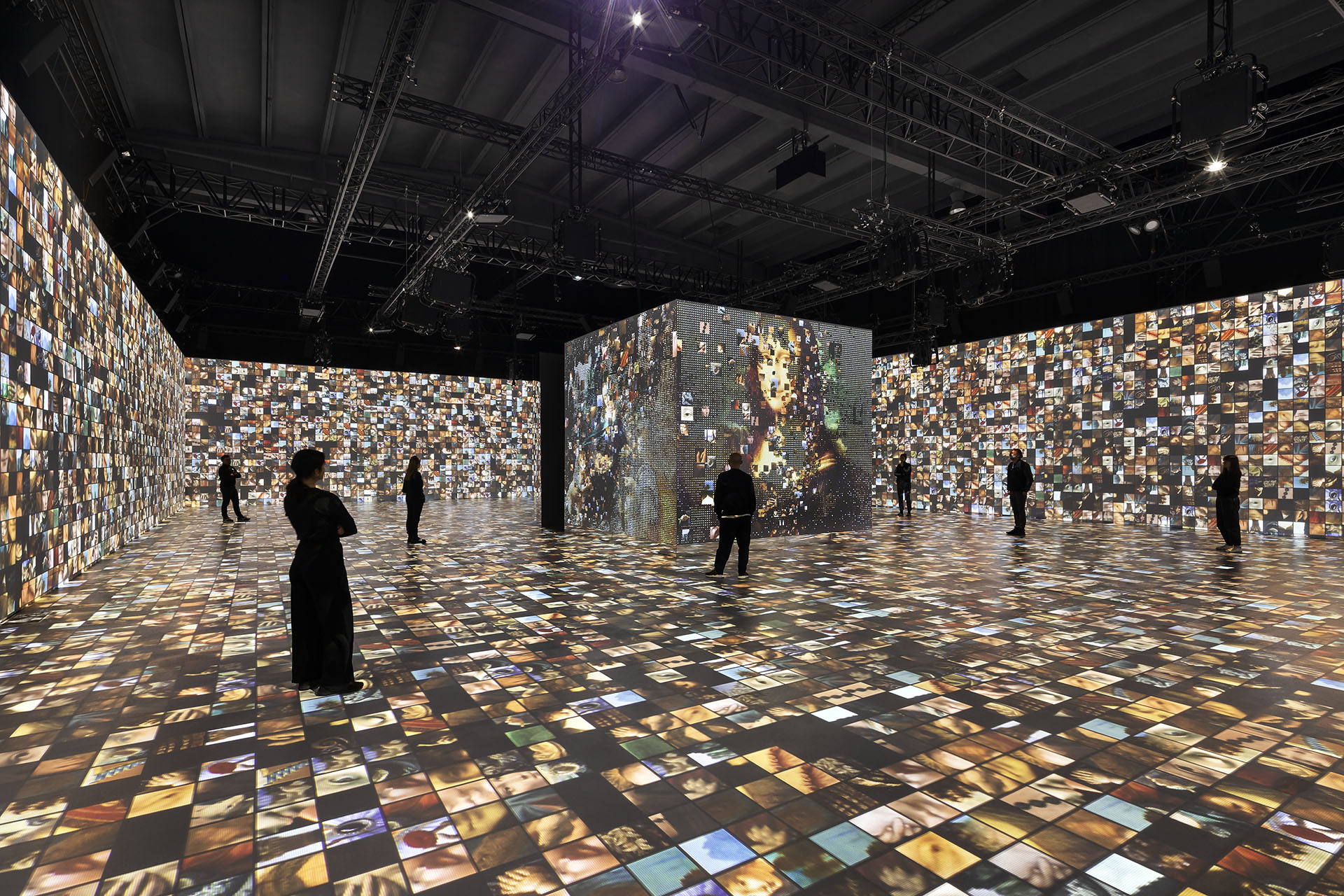
An immersive experience is one that makes the audience feel present inside the experience rather than simply positioned in front of it. That sense of presence can come from story, space, sound, interaction, scale or technology, but no single ingredient creates immersion on its own.
The word is now used for everything from digital art exhibitions and theatre to retail installations, gaming and branded attractions. That breadth is useful, but it can also make “immersive” sound like a synonym for “large screen”. It is not.
A room full of projections can be immersive. So can a quiet, low-tech environment. The more useful test is whether the design creates a convincing relationship between the audience, the space and the idea they have entered.
Immersion is a relationship, not a format
Traditional media often gives the audience a defined viewing position. A cinema audience faces a screen. A reader follows the page. A conventional gallery visitor usually looks at an object from outside it.
Immersive experiences can change that relationship. The visitor moves through the work, turns in different directions, encounters content at their own pace and may influence what happens. The environment itself becomes part of the storytelling.
Recent academic work on immersive experience frames the idea in similar terms: immersion emerges when the design of the concept, space and interaction aligns with the participant's psychological engagement. In plain English, the experience has to give people something to enter and a reason to stay mentally present inside it.
1. A clear concept gives the experience a centre
Immersive technology can create astonishing effects, but an audience still needs to understand what the experience is about.
That does not require a conventional plot with a beginning, middle and end. The organising idea can be a story, an emotional progression, a set of questions, a journey through an artist's work or a new perspective on a familiar subject.
The concept is what lets the design team decide what belongs and what does not. Without it, projection, audio, interaction and spectacle can accumulate without creating a coherent experience.
2. Space is part of the storytelling
Immersive work cannot be separated from architecture. Walls, floors, ceiling height, entrances, darkness, sightlines and transitions all affect what the audience notices and how they move.
A narrow corridor can create anticipation. A sudden high-volume room can create scale. A low, quiet space can make a visitor lean into a detail. The same content can feel completely different depending on where it is encountered.
This is also why touring immersive experiences require careful design. A production may need to preserve a recognisable creative identity while adapting to venues with different dimensions and technical conditions. Spatial design is therefore both creative and operational.
3. Interaction gives the audience agency
Interaction does not have to mean pressing a button. At its simplest, the audience makes decisions about movement and attention. More responsive environments can react to touch, gesture, position, voice or other input.
The creative value is not that the system proves it is technologically advanced. It is that the visitor's presence matters.
When a person can reveal something, change an environment or make a choice that affects what they see, they stop being only a spectator. That sense of agency can make the experience feel personal even when hundreds of other people move through the same installation each day.
4. Sound can carry attention and emotion
Immersion is often discussed visually because projection and LED are easy to photograph. Sound can be just as important.
A score can build anticipation, connect separate chapters and make a transition feel continuous. Spatial audio can make sound appear to come from a particular point in the room, redirecting attention or making movement feel as though it travels around the visitor.
At large immersive art venues, multi-speaker systems are often designed alongside the projection rather than added afterwards. The principle applies at any scale: what the audience hears changes how the space feels.
5. Sensory intensity needs pacing
More sensory input does not automatically create more immersion.
Research comparing immersive and traditional exhibitions has found strong relationships between sensory intensity, visitor attention, experience and satisfaction. That is a useful reminder that multi-sensory design can be powerful, but the practical lesson is not to maximise every stimulus at once.
Good immersive experiences control attention. A quiet moment can make the next large sequence feel bigger. A small interactive detail can be more engaging than another wall of animation. Changes in pace give audiences time to understand what they have just seen and prepare for what follows.
6. Technology should disappear into the experience
Media servers, calibration, tracking systems, projectors, sensors and networking can be technically complex. Ideally, the visitor does not spend much time thinking about them.
The best technology earns its place by doing creative work. Projection can change the perceived scale of a room. Sensors can make the environment responsive. AI can support forms of interaction or generative behaviour. Spatial audio can make a narrative feel located around the audience.
If the technology calls more attention to itself than to the subject, it may be breaking immersion rather than creating it. The audience should remember what the experience made possible, not the specification sheet behind it.
7. Comfort and accessibility affect presence
It is difficult to feel immersed when you are mainly thinking about discomfort, confusion or whether you can safely move through the next space.
Wayfinding, seating or rest opportunities, accessible routes, sensory warnings and clear pre-visit information all contribute to an audience's ability to stay present. The exact requirements vary by production and market, but accessibility should influence experience design rather than being treated as a separate compliance exercise at the end.
The same applies to practical orientation. Darkness may be creatively useful, but visitors still need to understand where they can move. Interaction may be novel, but people need enough guidance to know when and how to take part.
8. An immersive experience needs an ending, not just a loop
One of the risks of digital installations is that content can become a sequence of impressive moments without a sense of arrival.
A satisfying experience does not need a theatrical finale, but it benefits from progression. The audience should feel that they have moved through an idea, discovered something or reached a different perspective from the one they started with.
This matters particularly for IP-led and cultural experiences. People can already find images, facts and video online. A physical attraction needs to provide a relationship to the subject that feels different because the visitor was there.
Da Vinci Genius: combining the ingredients
Phoenix Immersive's flagship production, Da Vinci Genius, uses several of these elements together. Rather than presenting Leonardo da Vinci only as a painter, the experience explores his wider curiosity across art, invention, astronomy and science.
Large-scale visuals change the scale of the material. Spatial sound and an original score by GRAMMY-nominated electronic producer Sasha shape the atmosphere. Participatory design gives audiences an active role, while the physical journey turns Leonardo's ideas into a sequence of spaces rather than a conventional display.
The technology is important, but it is not the point of the experience. The point is to give audiences a way into a mind and body of work that would be difficult to reproduce through a screen or static exhibition alone.
The simplest test
Ask what the audience is doing in relation to the experience.
Are they simply looking at content that could work just as well on a screen, or do their movement, attention and physical surroundings meaningfully change the way they encounter it? Does the design give them a role? Does the space support the story? Do the sensory elements direct rather than overwhelm?
Immersion can come from spectacle, but it can also come from curiosity, agency and focus. The strongest experiences use every element - creative, spatial, sensory and technical - to make the audience feel that they have entered something rather than merely watched it.
Interested in licensing or hosting a Phoenix Immersive experience? Get in touch.