
How to Programme an Immersive Venue: Single Shows, Rotating Titles and Sequential Residencies
5 min read
An immersive venue does not have to be built around one show forever. As the sector develops, operators have more ways to think about programming: a single long residency, multiple titles across a weekly schedule, or a sequence of different shows running through the same technical installation.
An immersive venue does not have to be built around one show forever.
As the sector develops, operators have more ways to think about programming: a single long residency, multiple titles across a weekly schedule, or a sequence of different shows running through the same technical installation.
That creates a useful shift.
Instead of asking only, “Which immersive experience should we book?”, a venue can ask, “What kind of programme do we want to build?”
Start with the operating model
Programming begins with the practical reality of the venue.
A destination attraction in a tourist district may have a different audience pattern from a cultural venue in a city centre. A temporary pop-up may need to make its impact within a few months. A dedicated immersive space may need reasons for audiences to return across the year.
Operators should consider opening days, session capacity, audience mix, school and family demand, evening traffic, tourism, local seasonality and the amount of time available for marketing each title.
The programme should fit those conditions rather than forcing the venue into a model copied from somewhere else.
Option one: a single-title residency
The simplest model is a dedicated residency.
One production occupies the venue for an agreed period and becomes the focus of the space.
There are clear advantages.
The audience proposition is easy to communicate. Marketing can concentrate on one title. Front-of-house teams become familiar with one visitor journey, and the venue can build recognition around the production.
For a strong title entering a new market, this focus can be useful.
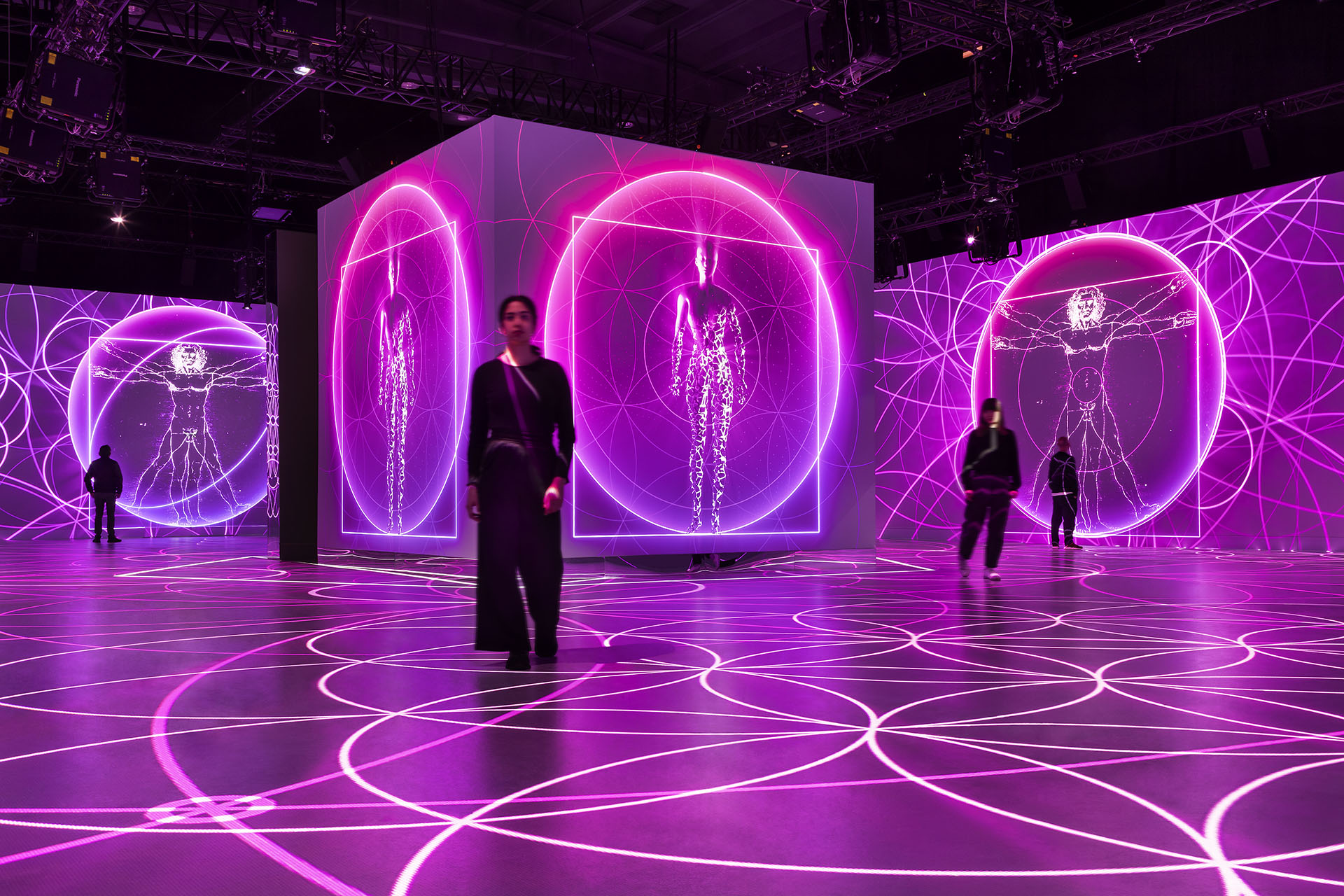
Phoenix Immersive offers both Da Vinci Genius and Living Canvas: Van Gogh as standalone productions. Each can be licensed independently for a dedicated residency.
The key question is duration.
A residency needs enough time to justify installation and build awareness, but operators should also consider how demand may change once the initial launch audience has attended.
Option two: rotating titles
A venue can also programme more than one production within the same period.
That might mean different titles at different times of day, on different days of the week, or according to seasonal and audience demand.
The attraction is variety.
A family audience might respond differently to an afternoon programme than an adult cultural audience attending later in the day. Different titles may also create opportunities for distinct marketing campaigns without requiring the venue itself to close and rebuild.
This model depends heavily on the technical platform.
If changing from one show to another requires major physical reconfiguration, frequent rotation quickly becomes impractical.
Phoenix Immersive's current portfolio model installs Da Vinci Genius and Living Canvas: Van Gogh on the same core technical platform, allowing operators to move between the productions through programming rather than rebuilding the installation.
That makes rotation an operational choice rather than a new fit-out.
Option three: sequential residencies
A third model is to run one title for a defined period and then launch another.
This creates two distinct public-facing residencies while retaining the underlying technical installation.
For example, a venue might launch with one production for several months, then refresh the marketing, audience proposition and selected pre-experience elements before introducing the next title.
This approach creates a second launch moment.
That can be valuable because the venue is not relying indefinitely on the awareness generated by its original opening. A new title gives press, partners, previous visitors and local audiences a fresh reason to pay attention.
Phoenix Immersive currently supports sequential programming of its two productions through a shared technical platform.
Programming should reflect audience differences
Two immersive shows should not be treated as interchangeable files on a server.
Each production has its own subject, tone and potential audience.
Operators should think about who is likely to attend, when they are likely to visit and what motivates the purchase.
An art-led title may attract cultural tourists, existing art audiences and people looking for visually distinctive experiences. A more family-focused production may perform differently around weekends and school holidays.
Audience assumptions should be tested against local data rather than taken for granted.
Programming becomes stronger when it responds to actual visitor behaviour.
Plan the marketing calendar with the programme
The programme and marketing plan should be built together.
A single-title residency needs an announcement, education phase, opening campaign and ongoing reasons to attend.
A rotating model needs clarity. Audiences must understand which show is running and when, without the venue's messaging becoming confusing.
Sequential residencies create a different opportunity. The transition can be treated as a genuine new launch, with refreshed creative, press outreach, partnerships and CRM communication.
The advantage of changing content is partly lost if the marketing makes it look like nothing has changed.
Think about repeat visitation
Immersive venues often face a simple challenge: once someone has seen the show, what brings them back?
Not every visitor needs to return. A strong tourism market can sustain significant first-time attendance.
But programme variety creates another option.
A visitor who enjoyed one production already understands the venue, format and practical experience of attending. A second title can give that person a reason to return without asking them to repeat exactly the same content.
This is particularly relevant for venues building their own local brand alongside the individual shows they host.
Over time, the venue itself can become a trusted destination for immersive culture rather than merely the address of one attraction.
Shared infrastructure can change the economics of creative refresh
Installing immersive technology is a substantial operational undertaking.
Projection, media servers, sound, networking and interaction systems all need to be integrated and commissioned.
If every new production requires a completely new technical build, changing the programme can involve significant disruption.
A shared platform changes that relationship.
The core installation can remain in place while the audience-facing content changes. That does not remove the work involved in launching a new title, but it can reduce the need to treat each programme change as an entirely new venue build.
For operators, this makes content strategy and infrastructure strategy increasingly connected.
Do not programme purely for novelty
More titles do not automatically create a better venue.
A constantly changing programme can make marketing harder, reduce the time available for each show to build awareness and create operational complexity.
The aim should be deliberate variety.
A venue should know why a title is being programmed, which audience it serves, how long it needs to establish itself and what role it plays in the wider calendar.
Sometimes the right answer will be one strong residency.
Sometimes it will be a rotation.
Sometimes it will be a planned sequence that gives the venue several distinct moments across the year.
The important change is that immersive operators increasingly have those choices.
A venue can be more than a container for a single show. With the right technical and licensing model, it can become a programmable platform for a wider portfolio of experiences.
Building an immersive programme? Speak to Phoenix Immersive about standalone, rotating and sequential licensing options for your venue.
Interested in licensing or hosting a Phoenix Immersive experience? Get in touch.