
Projection-Mapped Experiences for Venues: What Operators Need to Know
5 min read
How projection-mapped immersive experiences work, and what a venue needs for them: light control, surfaces, projectors, power and content.
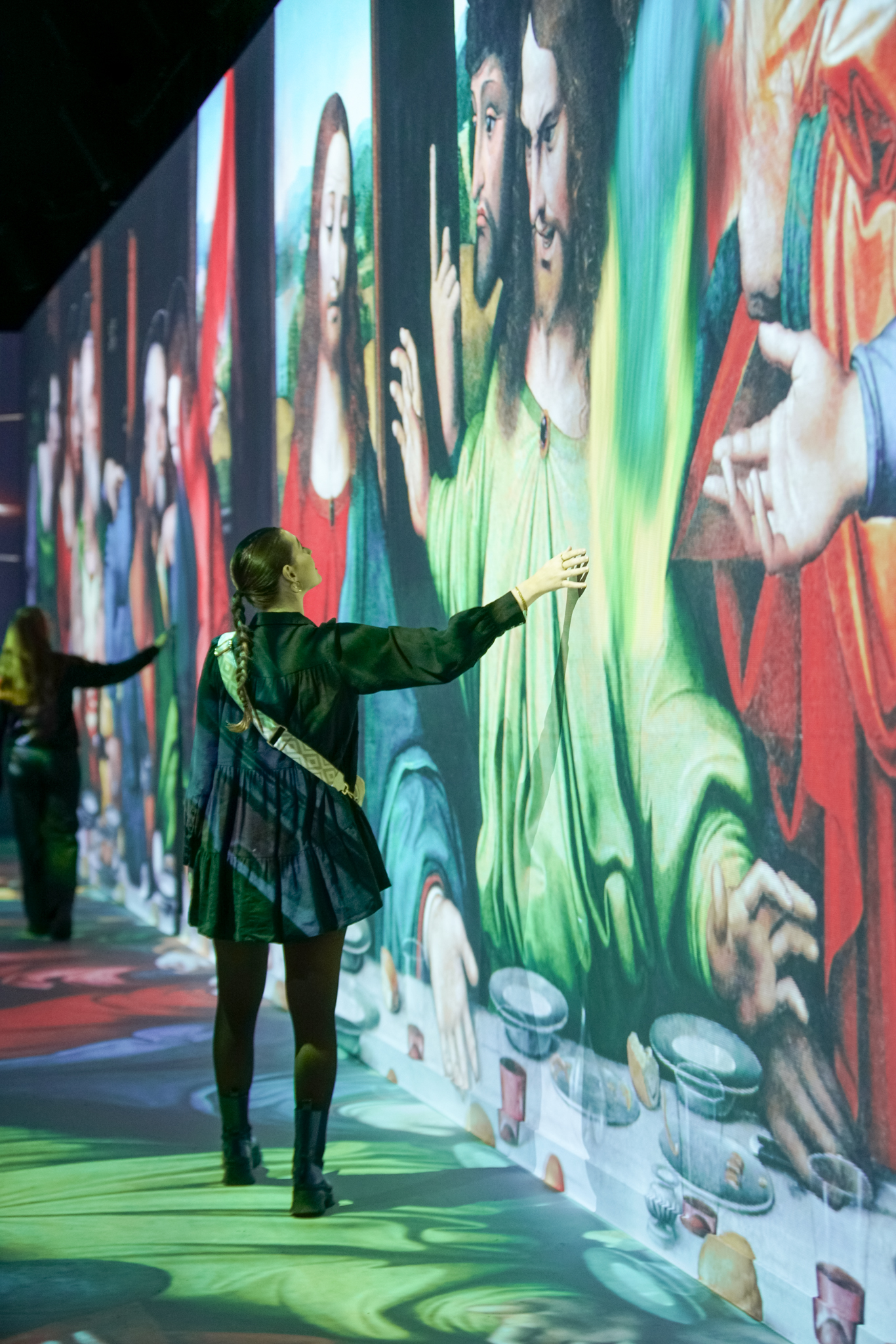
A projection-mapped immersive experience uses projectors to turn the walls, floor and sometimes ceiling of a room into a continuous display, with the content designed to fit the room's actual geometry. The picture wraps around the audience instead of sitting on a screen in front of them. For venues, it is one of the most adaptable ways to turn an ordinary building into an immersive attraction, as long as the building is chosen with care.
What is projection mapping?
Projection mapping, also called video mapping, is a technique used to turn objects, often irregularly shaped, into display surfaces for video projection. Specialist software maps the content onto the physical surfaces so that the image lines up with the space rather than simply landing on it.
In an immersive exhibition, several projectors are usually blended together to produce one seamless, brighter image across a large area. The trade term is edge blending, sometimes called stacking. The idea is older than most people assume: Wikipedia's overview traces early projected scenery back to Josef Svoboda's Laterna Magika at Expo 58 in Brussels, and notes the technique is now widely used in cultural heritage settings as an edutainment tool.
Why do venues choose projection-mapped shows?
The appeal is flexibility. A projection-mapped show does not need a purpose-built auditorium, because the content is mapped to the surfaces that already exist. That makes it well suited to converted warehouses, heritage buildings, former retail space and exhibition halls.
There is also a programming advantage. When the visuals are digital, a venue can change what is on the walls without rebuilding the hardware. Phoenix Immersive's two shows, for example, run on the same core technical platform, so an operator can move between them through programming rather than rebuilding the installation.
Read next: [Touring vs Permanent Immersive Experiences](https://phoeniximmersive.com/news/touring-vs-permanent-immersive-experiences)
What does the venue need to get right?
Ambient light
One event-industry article puts it bluntly: "Ambient light is the enemy of projection mapping technology". Windows, skylights, open doors and bright signage all wash out the image. A venue that cannot be darkened properly will struggle, however good the content is.
Surfaces and geometry
The colour, texture and condition of the surfaces affect how the image looks. Columns, alcoves and awkward corners can be an advantage if the content is built for them, and a problem if it is not. This is why a proper site survey matters, and why usable geometry often counts for more than headline floor area. Our guide to what makes a good immersive venue covers the wider checklist.
Projector brightness and blending
The right projector depends on the size of the surface, the distance to it and the light in the room. As a rough guide from Wikipedia, a 2,200-lumen projector is adequate for many smaller projections under indoor light, while large-scale projections use projectors of 20,000 lumens or more. Treat those as orientation, not a specification. Ask your licensor for the actual requirements for your room size.
Power, cooling, rigging and access
Projectors draw power and give off heat, and they need to be mounted securely and reached for maintenance. A good technical specification will set out power, data, cooling and rigging requirements before you commit, so your contractor can price the work properly.
Content made for the room
Content created for one geometry will not simply drop into another. Practitioners' guides to projection mapping make the same point: the content has to be built specifically for projection mapping. In a licensed show, that is handled by offering defined formats, so the production has been designed for a known range of room sizes.
What changes when projection is interactive?
Projection-mapped work can be static, video-based or interactive. An interactive show adds sensing and real-time systems, so the visuals respond to visitors. That raises the stakes on reliability, because audiences notice immediately when a wall fails to react, and on staffing, because someone needs to understand how the system behaves.
It also changes the experience.
A passive show asks people to watch. A responsive one asks them to take part, and tends to be remembered differently as a result.
We explore that distinction in more detail in our article on interactive and immersive experiences.
How Phoenix Immersive approaches projected, interactive shows
Phoenix Immersive produces and licenses interactive immersive experiences built around large-scale projection, spatial sound and gesture-based interaction. Its shows are offered in three formats of approximately 90, 180 and 400 square metres to suit different venues.
In Da Vinci Genius, a Phoenix Immersive production, visitors use responsive surfaces to set flying machines in motion and complete unfinished drawings. The show has been presented in Amsterdam, Berlin, Tallinn, Riga, Delhi, South Florida and Mumbai. Technical integration, commissioning, training and quality assurance are provided for each deployment.
If you have a venue in mind and want to understand whether it could work, the licensing options page is a good place to start, and the team can talk through the technical requirements with you.
Frequently asked questions
What is projection mapping in an immersive exhibition?
Projection mapping uses projectors and specialist software to display content that is fitted to the shape of a room's surfaces. In an immersive exhibition, several projectors are blended together so the walls and floor become one continuous display around the audience.
How bright do projectors need to be for an immersive venue?
It depends on the size of the surface, the distance and the ambient light. As a rough guide, a 2,200-lumen projector suits smaller projections in indoor light, while large-scale projections use 20,000 lumens or more. Your licensor should specify the exact requirements for your room.
Do projection-mapped shows need a purpose-built building?
No. Projection-mapped shows are often installed in converted or existing buildings, provided the space can be properly darkened and has suitable surfaces, power, cooling and access. A site survey will confirm whether a particular venue works.
Can a projection-mapped immersive experience be interactive?
Yes. Projection-mapped work can be static, video-based or interactive. In an interactive show, sensors and real-time systems let visitors change the visuals by touch, gesture or movement, as they do in Da Vinci Genius and Living Canvas: Van Gogh.
Interested in licensing or hosting a Phoenix Immersive experience? Get in touch.